October 08, 2026




Pebbles are the most patient craft material in Britain. They arrive already polished, shaped by decades of tide, grit and weather, and they cost nothing but a walk. That patience is worth respecting. The stones that catch your eye are part of a working coastline: they hold shingle banks together, shelter small creatures between tides and keep a beach where it has always been. A few minutes of checking before you set off is all it takes to collect well.
Responsible foraging is not about never picking anything up. It is about knowing where you are, taking very little, and leaving the beach able to do its job. This checklist is written for the hobby collector: the person who wants a handful of sea-worn stones for a mosaic, a memory jar or a rainy-afternoon project, not a vanload for resale.
A beach is not a static pile of stones. It is a system. Waves sort pebbles by size and shape; storms throw them up into ridges; tides drag them back down. Those ridges act as natural sea walls, absorbing wave energy before it reaches dunes, cliffs or low-lying land. The spaces between pebbles are habitat too: tiny invertebrates, seaweed holdfasts and small fish use them as shelter when the tide is out.
Remove a few stones from a vast beach and almost nothing changes. Remove a few stones from the same short stretch, week after week, and the effect adds up. That is why the rules that matter most are not only about protected sites. They are about scale, repetition and intent.
Most of the British coast belongs to someone. In England, Wales and Northern Ireland, much of the foreshore, the strip between high and low tide, is owned by the Crown Estate; elsewhere it may belong to a council, a harbour authority, a private estate, the National Trust, a Wildlife Trust or the RSPB. In Scotland, much of the foreshore is managed by Crown Estate Scotland, though local arrangements vary. Each of those owners can set their own rules, and many do. So the honest answer to "can I collect here?" is usually: it depends on the beach, the season and how much you want to take.
Three things make a trip straightforward:
Anything beyond that needs permission. If your pebbles end up in something you sell, even on a small craft-fair stall, you have moved from hobby into an activity that councils and landowners treat differently. Ask first, in writing, and keep the reply.
Some owners are more relaxed than others. A remote shingle beach with no signage may still be a protected site or private land. A popular town beach may have a clear byelaw against removing stones. Neither situation is obvious from the sand alone, so check before you fill your pockets. If a beach has a warden, a visitor centre or a harbour office, a quick conversation is often the fastest way to get a straight answer.
Some places are protected by law, and quiet stone removal is exactly the kind of small, repeated act that protection exists to prevent.
If a beach sits inside a designated site, treat the whole stretch as a no-collecting zone unless a warden or the managing organisation tells you otherwise. The same applies to marine protected areas, where the interest may be below the tideline rather than on the beach itself. A stone that looks loose may be part of a feature that took decades to form.
Vegetated shingle is a good example. It looks like rough, empty ground, but it can support rare plants such as sea-kale, yellow horned-poppy and oysterplant. Walking across it compacts the surface; removing pebbles disturbs the thin layer of soil and roots. Stay on paths, keep dogs close and take photographs rather than souvenirs.
Where no sign or byelaw gives a figure, use the pocketful principle: take only what fits comfortably in one hand for personal craft use, and do not return for more the same weekend.
If a byelaw does state a limit, that number is the one that counts, and it is usually smaller than you expect.
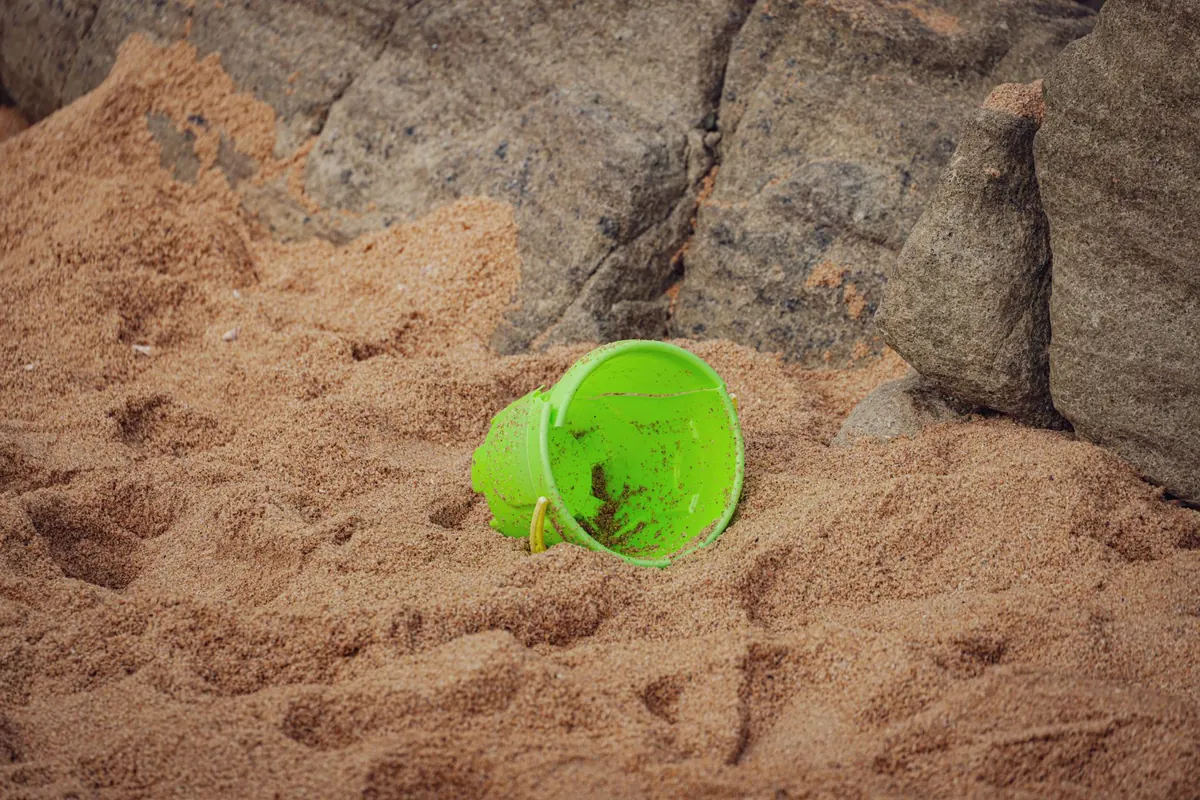
Skip the bucket, the rake and the sieve. A bucket of pebbles looks modest until you imagine a hundred people doing the same thing on the same bank each summer.
For a school, club or community project, contact the landowner or council in advance and ask for a named spot and a quantity. If they say no, accept it and find a beach with fewer restrictions. If they say yes, stick to the agreed area and time, and brief everyone before they arrive. Children in particular will pick up far more than they need unless an adult sets the limit first.
Some pebbles are scientifically or culturally valuable: worked flints, fossils, strange mineral nodules, or stones that show evidence of past human activity. If you find something that looks unusual, photograph it, note the location and leave it where it is. In some cases, reporting it to the local museum or finds liaison officer is more useful than taking it home.
Even on a beach where collecting is allowed, how you collect matters. The goal is to leave no obvious trace of your visit.
It also helps to visit the same beach at different times. You will learn which stones are freshly washed in and which are part of a stable bank. On a falling tide after a winter storm, there may be more loose material than in midsummer. On a nesting beach in spring, the opposite is true: the less you walk and pick, the better.
Back home, rinse your pebbles in fresh water to remove salt and sand, then let them dry completely before storing them. Salt can leave a bloom on some stones, and damp sand can scratch a polished surface. Sort them by colour, size or shape in shallow trays or jars; a simple egg carton works well for temporary sorting.
For craft use, softer stones such as chalk or shale may crumble, while granite, quartzite and flint usually hold up well. If you plan to paint or glue them, clean them with warm soapy water and let them dry again. A coat of matt varnish is optional, but many collectors prefer the natural finish.
The best projects often use fewer stones than you think. A line of flat pebbles can become coasters or garden markers; a handful of mixed colours can fill a small mosaic; one unusually striped stone can be the centre of a memory jar. The point is not to gather a hoard. It is to bring home a small, legal, low-impact reminder of a good walk.
No pebble is worth a fine, a damaged habitat or a beach that has lost a little more of its natural defence. If you cannot find out who owns the land, if the signs are unclear, if the site is protected or if you simply feel uneasy, leave the stones where they are. There will always be another beach, another tide and another walk. The coastline has been patient for thousands of years; it can teach us to be patient too.
Photo: Magda Ehlers / Pexels

A hive of pebble art and craft inspiration..
Copyright © 2026 Pebble Hive. All rights reserved. Pebble Hive.